Brandy
|
PALINKA IN A BARREL
I am not going to go into too much detail on what “palinka” is or how it is made, Wikipedia touches the subject pretty well. All type of fruit with sugar can be used to distill alcohol. The “strength” of the alcohol is decided at distillation process and is specific to the taste of the consumer or to the region where is produced. Lower alcohol is called “tzuica” in my country of berth: Romania, the stronger version is “palinca” in Romania and Hungary. These fruit brandies are very popular in Eastern Europe, but “grappa’- the grape brandy Italians enjoy or the “calvados” – the apple-pear brandy specific to France are nothing else but types of “palincas”.
The fermentation will start on its own if warm enough, but in early spring (I make apple brandy from apples kept over winter in March) or late fall, I add champagne type yeast to speed up the process. Fermentation takes from one week to three, again depending on the outdoor temperatures. Maybe is the most important phase of the process, if fermentation is incomplete, the brandy will smell and taste like yeast, left too long, it turns into vinegar. But it’s not too complicated, stir the mush at least once a day, to release the gas produced during the process, when no more gas bubbles are produced and the fruit pulp that stays on the top during fermentation falls to the bottom, letting the liquid on top, the fermentation is done, and now you have few days to start distilling it. Then follows the distillation process, best done in a copper installation. It does not cost as much as it seems, I built mine with less than $500, some with my own hand and some with the help of a sheet metal shop.
I want to focus on what happens after the desired brandy was obtained. The brandy we have now, if correctly distilled has no color, should have a taste of the fruit it was made from and is has little or more rough, fiery taste. Until later in life, I used to store it in bottles or other glass larger containers. As days pass, the brandy becomes smoother, keeping the original fruit taste. But, then I start experimenting with ageing the brandies I made in barrels. The thinking behind was just the simple observation that the best brandies on the market are the ones aged for longer time and aged in barrels.
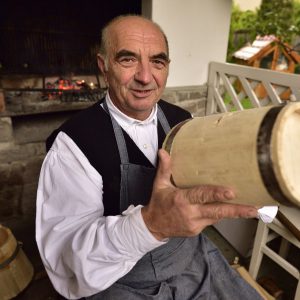
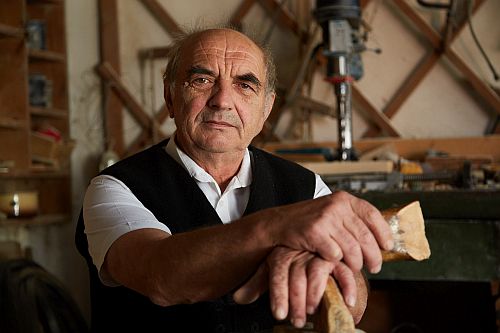
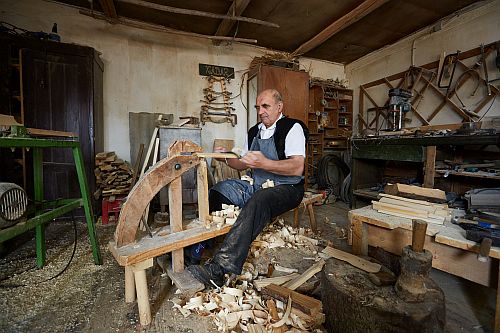
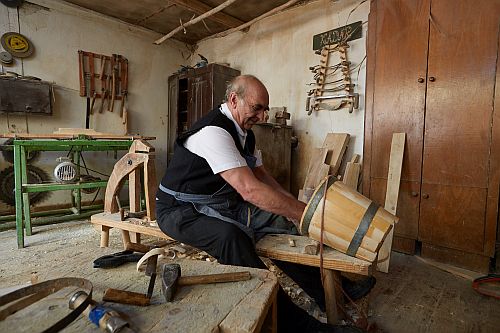
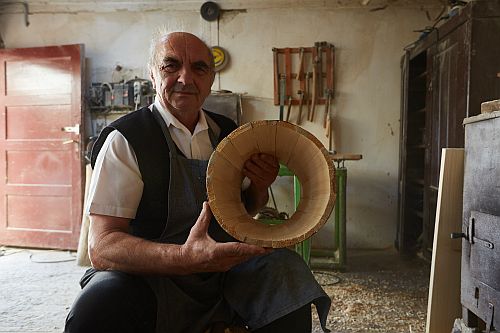
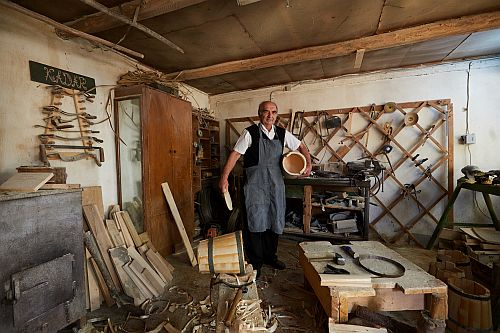
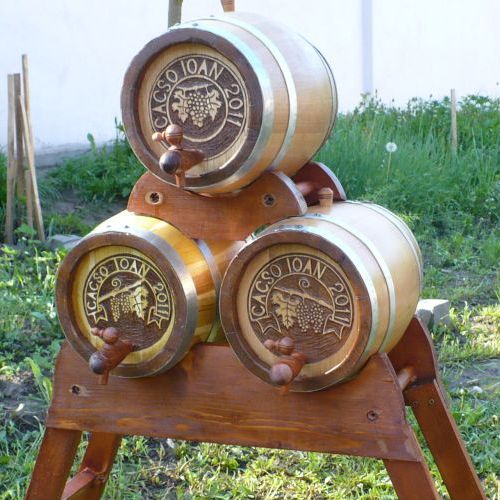
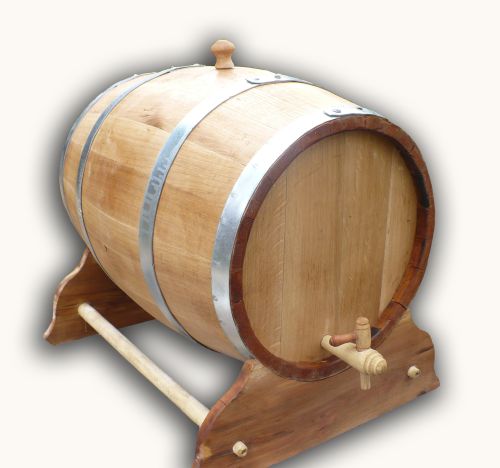
For a simple household, that produces palinca mostly for own consumption, barrels are a rare thing. Coopers are not so easily found, a rare trade to be found these days and barrels are not cheap either. I was lucky to find Mr. Tibor-Barna and his Haraly Cooperage wood shop, this opened a new venue for my little palinca making “operation”. I found in Canada and US some places to get small size barrels, but they are all made of oak, quite expansive and, reading the comments of people that bought them, some are poorly made, with glue being used to seal the barrels. In a nutshell, not what you want to keep your brandy in. Although Haraly Cooperage is located in my native country, I needed the Internet to find them while living on another continent….
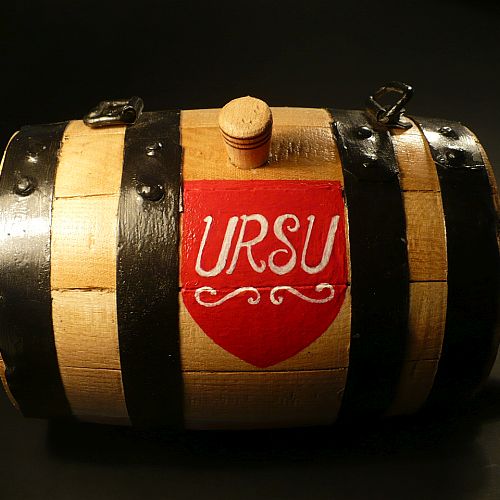
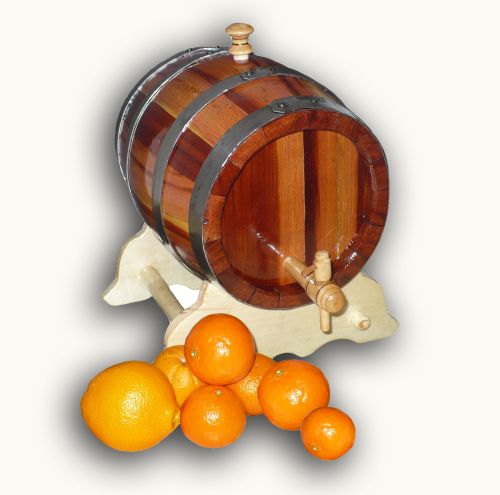
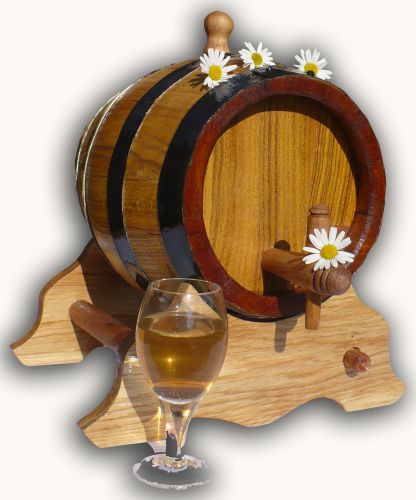
What makes Mr. Barna’s cooperage different are the many kind of wood essences his barrels are made from. Oak is the widely used wood barrels are made around the world, but although the wines and liquors stored in oak barrels are very good, I have the feeling that oak is so popular due to the fact that is readily available in large quantities and large enough size for large capacity barrels. Mr. Barna offers mulberry, apple, pear, cherry wood barrels beside the popular oak. Some of these are very rare, almost unique essences, and what I came to find during my own experiments, provide quite different colour and aroma to the brandies-palincas stored in them. I would make apple brandy, for example and age the same initial liquor in oak, cherry, mulberry and pear barrel (those are the ones I have acquired by now).
I take them out at the same time, then organize a little tasting of the brandy. It is always amazing on the nuances of colors, smoothness and subtle aromas that each barrel lends to the liquid. Mullberry and cherry give a darker, a bit reddish color, pear a lighter yellowish, oak a daker brown (depends on the oak type too). But the taste and smell is what is the real surprise and amazing qualities the barrels transmit to the brandy. After few months in contact with the wood, the smell and the taste of the brandy stored in each barrels is quite different from one to the other one. This is hard to quantify, as is so driven by each person’s taste and preferences. All I can say is that a barrel certainly improves the quality of any brandy, adding pleasant colour, a pleasant fragrance and up to three extra layers of subtle aromas that can be detected while drinking. I am still just at the beginning of my experiments, and is hard for me to make any recommendations for what the best combination of what fruit of origin/barrel combination is the best (so far the pear brandy/pear barrel seems to be the only combination everybody agreed it is great). I guess it is still a matter of preference, the only thing I am sure of is that, to have a great brandy, a good barrel is a MUST.
Add new comment
|